15 May 2026
course - Leadership Comm. & Conflict Resolution
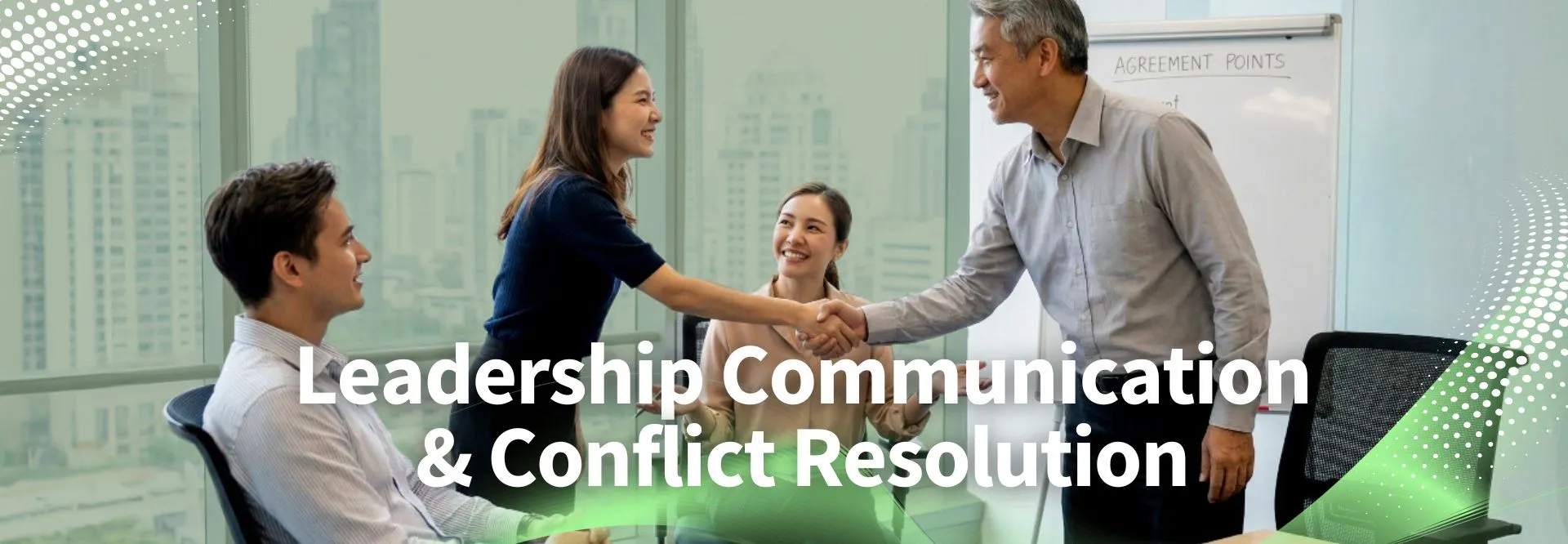
Leadership Communication & Conflict Resolution
Our programs are trusted by over 10,000 professionals from public and private sectors
SCHEDULE
| DATE: |
TIME: 9am – 5.30pm |
| LOCATION: Amara Singapore |
| Normal (from 2 May 2026) |
Early Bird (by 1 May 2026) |
Group of ≥3 (by 1 May 2026) |
| S$837.90 |
S$766.50 |
S$698.25 |
OVERVIEW
Public service leaders today face unprecedented challenges: managing teams across multiple generations, addressing citizen concerns that can rapidly spread through social media, and resolving conflicts that can escalate into public scrutiny or crises.
This intensive one-day program provides practical frameworks for navigating high-stakes conversations where logic alone isn’t enough. While policies, procedures, and data are important, emotionally charged situations require understanding the human needs driving resistance before rational solutions can take hold.
Drawing on Nonviolent Communication — the same framework Microsoft CEO Satya Nadella used to transform a conflict-ridden leadership team — you’ll learn how to de-escalate tension, uncover underlying needs, and foster constructive problem-solving.
What Makes This Leadership Communication & Conflict Resolution Workshop Unique?
- Structured, not soft: A clear communication framework that appeals to analytical, decision-driven leaders
- Designed for high-stakes leadership contexts: Focuses on authority, accountability, and escalation risk
- Scenario-driven learning: Realistic leadership situations, not generic role-plays
- Immediate transfer to work: Practical tools, scripts, and debrief protocols leaders can use immediately
- Globally recognised methodology based on the Nonviolent Communication (NVC) framework
FAQ About Leadership Communication & Conflict Resolution Workshop
Is this a “soft skills” or counselling-based programme?
No. The workshop uses a structured communication and decision framework focused on leadership effectiveness, clarity, and control in difficult situations..
Is this relevant for experienced, senior leaders?
Yes. The programme is designed for mid- to late-career leaders managing authority, escalation risks, and complex stakeholder dynamics.
Will participants practise real situations?
Yes. The workshop includes guided scenario drills based on realistic leadership challenges and facilitated debriefs.
Is the approach applicable across different roles and sectors?
Yes. The skills are role-agnostic and transferable across leadership, governance, and management contexts.
Join 10,000+ professionals who have benefitted from our workshops. Register Now!
BROCHURE REQUEST

Looking to learn more about our workshop? Fill in this form to request a brochure from us now!
REQUEST SUBMITTED
Your request has been submitted. We will get back to you in 3 working days.
WHO SHOULD ATTEND
Senior leaders and managers
Heads of departments and functional leaders
Leaders managing multi-generational teams
Leaders handling high-stakes, sensitive, or escalated situations
Leaders who want structured tools for difficult conversations and conflict management
BRIEF PROGRAM OUTLINE
Leadership Foundations & Self-Regulation
Recognizing fight / flight / freeze in self and others during high-stakes dialogue.
NVC Core Components for Leaders
Applying observations, feelings, needs, and requests to leadership communication.
Empathic Listening & Deescalation
Technique for steadying meetings and influencing tone in silence and in speaking.
Application & Integration
Repeatable practice handling "no," escalation, and difficult personalities.
WHAT YOU WILL LEARN
Recognize stress responses and self-regulate during high-stakes dialogue
Distinguish observations from judgments; replace blame with needs-based language.
Listen empathically to uncover needs behind "no," resistance, or anger; reflect back accurately.
Formulate doable, present-tense requests that invite collaboration.
Interrupt safely, redirect back to agenda, and defuse long-winded or hostile contributors.
Debrief tough interactions to learn, restore trust, and prevent recurrence.
Use silent empathy note-taking to steady meetings and influence tone even without speaking.